
Who Owns a Door County Property?
Finding a Door County owner starts with what you already know. That may be a street address or a name. It ends with the recorded instrument. LandNav and the Web Map can both locate a parcel. Search by street, PIN, owner, or mailing address. Copy down the parcel number, municipality, and legal description. Then compare the owner field on the assessor side with the most recent deed. If a deed names an entity, check the Wisconsin Department of Financial Institutions Corporate Records Search. Verify the filing there. Remember the hierarchy. A tax roll is an administrative record; the recorded conveyance is what confirms title.
- Search the property address or owner name in Door County LandNav or the Web Map.
- Copy the PIN, municipality, mailing address, and legal description from the matching parcel.
- Search the Register of Deeds index for the latest recorded transfer and compare the grantee.
- If the grantee is a business, compare its exact name with Wisconsin DFI corporate records.
Door County Owner Fields and Name Variants
LandNav offers last-name and first-name fields. The Web Map owner search takes a full or partial last name. The first name is optional there. Search the form of the name shown on the deed or tax record first. Then think about variants. These include a trust name, an LLC, an estate label, a trustee, or a personal representative. Couples sometimes appear indexed in the opposite order or with a different spelling. A name match alone proves little. Compare the parcel description, municipality, and mailing address before treating two records as connected.
LandNav also has an Owner Status dropdown whose options are not documented. Do not assume what that filter covers. The system handles current and historical properties. That helps when an earlier owner or a parcel split enters the trail. For entities, Wisconsin DFI's Corporate Records Search may list the legal name. It may also list the registered agent, principal office, status, formation date, and annual reports. A registered agent is not the beneficial owner. Use it to resolve the exact business name on a Door County deed, not to identify who truly holds the property.
Door County Mailing Address Clues
The mailing address on a parcel record shows where tax notices go. It is not automatically the situs. It may not be a home address at all. A lender, agent, trust, or an owner living outside Door County can receive the bill. The Web Map supports mailing-address searches. LandNav lets you compare owner and property-address fields side by side. Treat the mailing line as a record attribute only. It is not proof of occupancy or permission to contact anyone.
Dates matter here. The county map, tax roll, and deed image can each carry a different one. The Land Information Plan states that assessment data join map geometry nightly. An owner transfer may appear in the recording system before the parcel's owner field refreshes. Note the date on each result. Test any recent change against the most recent recorded deed. Details of a single current owner field appear on the current owner record page.
Door County Owner Records by Source
Door County owner information lives in separate systems because each custodian records a different event. The assessor roll gives the tax owner of record. The deed index names the parties to a recorded transfer. GIS ties an owner entry to a mapped parcel. DFI can clarify an LLC or corporation's filing name. You can compare these sources against each other. None of them alone identifies a beneficial owner in every case. Use each source for the question it can actually answer.
| Source | Owner Info It Gives | Access |
|---|---|---|
| Assessor / tax roll | Owner field, mailing address, parcel link | LandNav and municipal assessor |
| Register of Deeds | Grantor, grantee, deed and other instrument | Tapestry, Laredo, counter terminal |
| Wisconsin DFI | Business legal name and filing information | Corporate Records Search |
| Door County Web Map | Parcel location and owner-search result | Public viewer and parcel tools |
An owner of record is not always the occupant. An occupant is not always named in a deed or tax roll. Estate, trust, and entity names can stand between a property and a living person. Use the tax record to locate the parcel. Then use the recorded deed to confirm who transferred it. A directory entry, obituary, voter tool, or permit applicant can offer a lead. It is not evidence of ownership.
Door County's Web Map offers owner, parcel, property-address, and mailing-address search modes. The official map page displays the lookup controls you would use for an owner search.
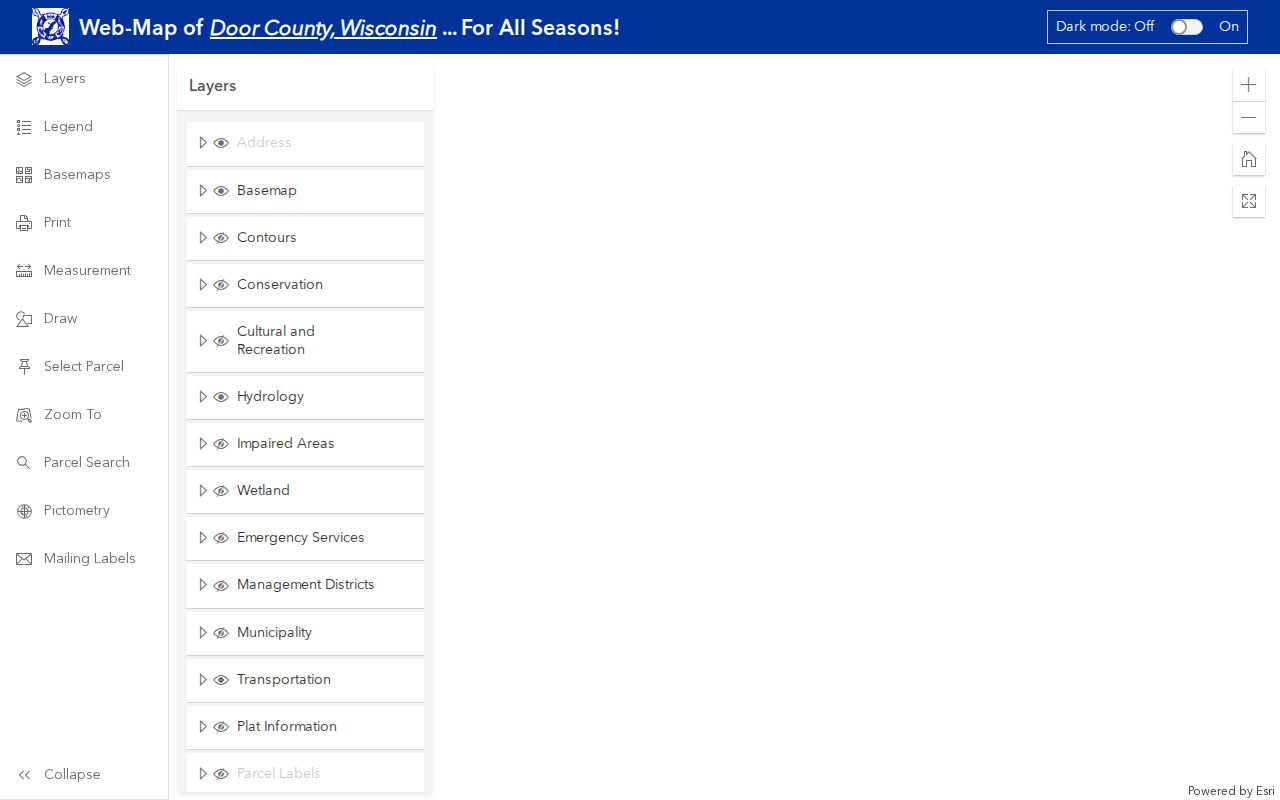
The map connects a name to a parcel. The deed remains the record of a conveyance.
A common surname can return several people at once. Narrow the search with a first name. Compare parcel locations rather than assuming one household. A single mailing address can group several separately assessed parcels. One property can also appear under a trust, an estate, an LLC, or joint names. Note the PIN, municipality, and source date beside each candidate you keep. The name in the tax system is a starting point for the deed search. It is not a statement about who lives there now.
Sturgeon Bay City or Town Owner Record
Sturgeon Bay is tricky in Door County. The name labels both a city and a separate town. A mailing address alone cannot tell you which one holds the parcel. The two municipalities rely on different assessors, and annexation can shift boundaries over time. Before calling an assessor or pulling a permit file, check the parcel's municipality in LandNav. Compare that result against the Web Map Municipal Civil District layer. That way you can be sure you have the right jurisdiction.
ZIP 54235 complicates things further. It lists Sturgeon Bay as the preferred postal locality. It also lists Maplewood as acceptable. Yet postal geography can cover land well outside the city, so treat USPS data as delivery information only. For jurisdiction, lean on county GIS and tax records instead. The county's assessor roster assigns the City of Sturgeon Bay to Associated Appraisal Consultants. The roster gives the Town to Sleepy Creek Appraisals. Whichever local district appears decides who fields your value or Board of Review question.
Door County Property Fraud Alert
Door County's Register of Deeds page links a service called Property Fraud Alert. It notifies subscribers when a monitored name turns up in a recorded document. Think of it as a watchdog, not a shield. It is not a title search. It is not a record correction. It is no guarantee against fraud either. A name alert never proves the subscriber owns the parcel. Nor does it prove a filing is improper. Always check an alert against the actual recorded instrument. Match it to the legal description too.
If an unexpected notice arrives, go to the county's official Register of Deeds page. Locate the document there. Contact the office for clarification. Keep the alert's name, recording date, and instrument reference alongside your search notes. This follow-up sits apart from the basic owner-finding method. The assessor and deed records establish the record trail. An alert simply helps you watch for future filings.
Door County's Recorded Owner Confirmation
Finding the owner field is only the start. Door County deeds are indexed by grantor and grantee. The online index reaches back to 1981. The office also describes older document images and tract material for earlier years. Search the grantee name from the parcel record. Then inspect the instrument itself. Compare its legal description and date against the tax entry. The latest deed may predate the assessor result. In that case, the public roll may lag behind the new grantee.
Confirming the most recent transfer differs from rebuilding every prior owner. A chain-of-title project calls for the pre-1997 tract and colortract fallback plus the deed books. The Register of Deeds also links a Property Fraud Alert service for ongoing monitoring. An alert, however, is not evidence of title. Keep a straightforward owner lookup anchored to the parcel and the latest relevant recording.
Limits of a Door County Owner Search
A Door County owner search will name the owner of record on a tax bill or recorded deed. That is often all you need. Still, it cannot tell you who actually lives there, who controls a trust, or whether a deed is clear of competing claims. Wisconsin layers privacy limits on top of that. Safe at Home shields some addresses, other statutes and court orders restrict more, and Wis. Stat. § 69.20 closes vital records. Vehicle and professional records follow their own rules.
Put the data to work carefully. Ownership records suit property due diligence, estate questions, boundary disputes, and public-record purposes. A true title search means reviewing the full chain of interests, and a parcel map is never a survey. For recorded proof, pull the deed index and image. For the current owner field and update timing, use the current-owner method.
Lawful use. A Door County owner lookup is for property research and due diligence. Do not use names or addresses to stalk, harass, threaten, or harm anyone.