
Door County Deeds by Instrument Type
The Register of Deeds records every instrument affecting land in Door County. Deeds transfer interests. Mortgages and liens do different work. They place or release encumbrances. The label on a deed helps describe the transaction, but it settles nothing about title, so read the whole instrument with its legal description and any later filings.
| Deed Type | What It Does | Common Use |
|---|---|---|
| Warranty deed | Conveys the grantor's interest with deed covenants | Ordinary conveyance where the parties use this form |
| Quitclaim deed | Transfers whatever interest the grantor has | Family transfer or title cleanup |
| Personal-representative deed | Conveys estate property through a representative | Probate administration |
| Transfer-on-death deed | Names a beneficiary for a later transfer | Estate planning instrument |
| Tax deed or deed after sale | Documents a transfer tied to a tax process | County tax-deeded property process |
The Door County deed records room holds more than deeds. Mortgages, land contracts, and easements fill the indexes too. Federal tax liens, lis pendens, plats, certified survey maps, and fixture filings appear as well. A mortgage is not an ownership deed. A satisfaction or release can show that a recorded claim was discharged. The Register of Deeds reports recorded documents from 1854 forward, and the online search page describes images reaching into the 1800s.
Door County Tapestry Search and Image Costs
Door County links its public deed search to Tapestry, with Laredo as the monthly subscription path. Tapestry is pay-as-you-go. Each search costs $8.75. It returns up to 200 listings. Detailed index information is free to view after a search, while document images cost $1 per page and Visa and Mastercard are accepted. A property report can add square footage, acreage, building details, tax or assessment data, and neighborhood information. It comes as an emailed PDF or a web version kept live for 60 days.
Public terminals are free during office hours. Find them at the Register of Deeds office, 421 Nebraska Street. That counter route helps when the web index is thin or the only clue is a legal description. Laredo suits repeated work. Its monthly subscription spreads the cost. Before paying for an image, note the document date, the parties, and the legal description, so the returned instrument can be checked against the parcel.
The county's online real-estate search page explains the access choices, and Tapestry's public search is the county-linked deed index. Its search screen leads with grantor and grantee fields.
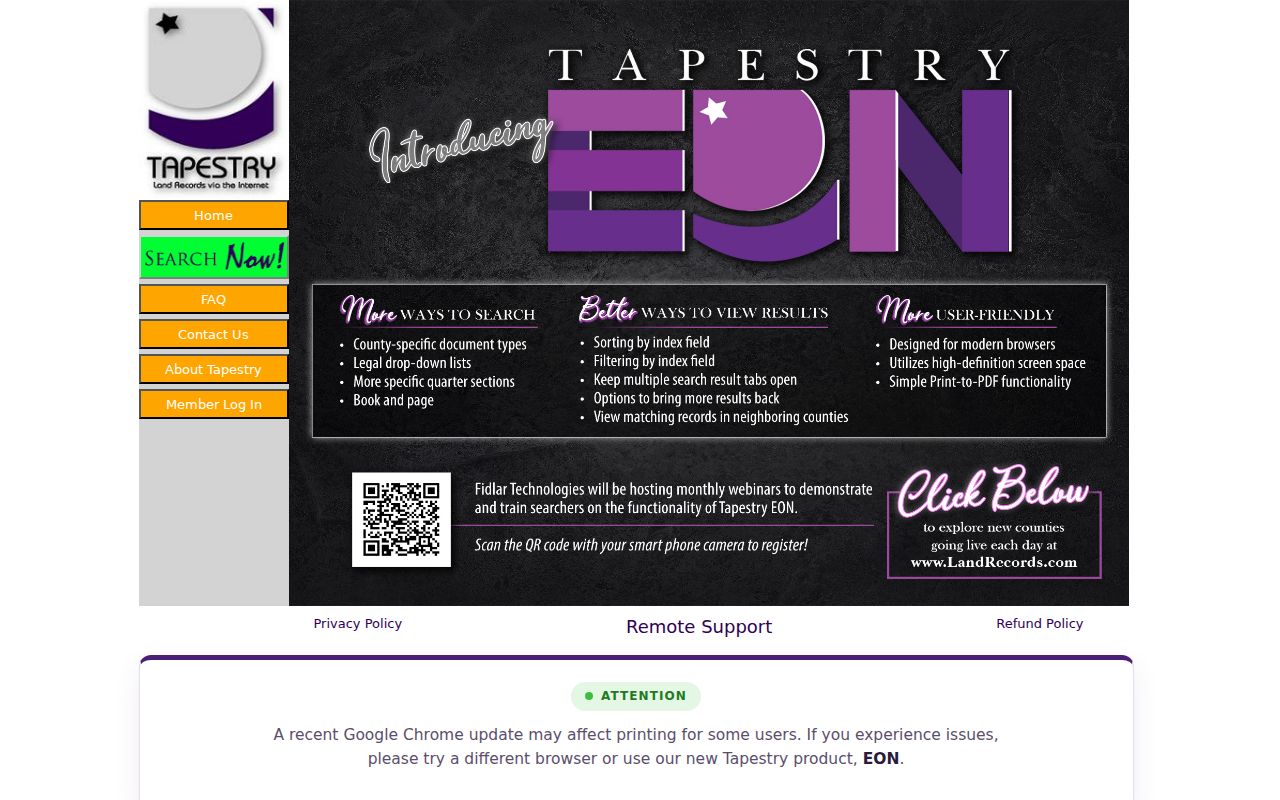
The result still needs review against the document image, parcel, and legal description.
Door County's 1981 Grantor Index Limit
The online grantor and grantee index reaches 1981 forward, and the county says it is not completely verified. Read that carefully. Only the name index is limited. Older documents and images are still described as available. For earlier searches, the Register of Deeds points to pre-1997 tract and colortract material and older land indexes. Start from a legal description, a plat, a section number, or a prior owner's name. Then ask the office which tract source fits.
Older instruments rarely carry a modern street address. Names can carry several spellings. Land contracts, estates, parcel divisions, and recorded plats complicate the route. The Door County Library's plat books begin in 1899. The Wisconsin Historical Society holds a digitized county atlas dated 1917 to 1923. Those sources place a tract in time, but the recorded instrument remains the source for a transfer claim; for tracing prior owners step by step, see the Door County former owners page.
Using the Door County Party Index
A grantor transfers an interest. A grantee receives it. To verify a single recorded transaction, search the name in each role as needed. Then compare the image. Check the parties, instrument type, date, and legal description. Tapestry's live field labels, document-type choices, sorting, and pagination appear only at the portal itself. The county confirms the service and its coverage limit, but any assumed dropdown, parcel filter, or date filter must be checked at the portal before you rely on it.
- Search the name shown in the instrument and note its role as grantor or grantee.
- Open the result image and verify the parcel description, recording date, and instrument type.
- Use the document reference to find a related release, mortgage, plat, or later filing.
- If the transaction predates the online index, take the legal description to the office's tract material.
- Grantor
- The person or entity shown as transferring an interest.
- Grantee
- The person or entity shown as receiving an interest.
- Chain of title
- The linked sequence of recorded transfers affecting the parcel.
- Book/page or instrument
- A clerk's reference used to locate a recorded document.
- Quitclaim deed
- A conveyance of whatever interest the grantor holds, without the same title covenants as a warranty deed.
Door County Copy Fees and Counter Access
Recording a document in Door County costs a flat $30. That holds no matter how many pages it runs. Copies follow a simple scale. A standard copy is $2 for the first page. Each page after that is $1, and certification adds $1. Oversized 10-by-13 material runs $3 per page. Large plats cost $5 per page. All fees are prepaid. The Tapestry image rate sits apart from the search charge at $1 per page. Because the county can revise its charges, confirm the current fee schedule before mailing a request.
The Register of Deeds sits on the second floor of the Government Center at 421 Nebraska Street in Sturgeon Bay. Its direct land-record line is 920-746-2270. Hours run Monday through Thursday, 7:00 a.m. to 4:30 p.m., plus Friday from 7:00 to 11:00 a.m. Terminals in the office are free during those hours. The county does not publish a full mail-order routine. Ask staff about the document reference, the payment method, and whether a plain or certified copy fits the need. The county's deed-access page lays out Tapestry, Laredo, and the public terminals. Its explanation makes the index cutoff and fee split easy to check.
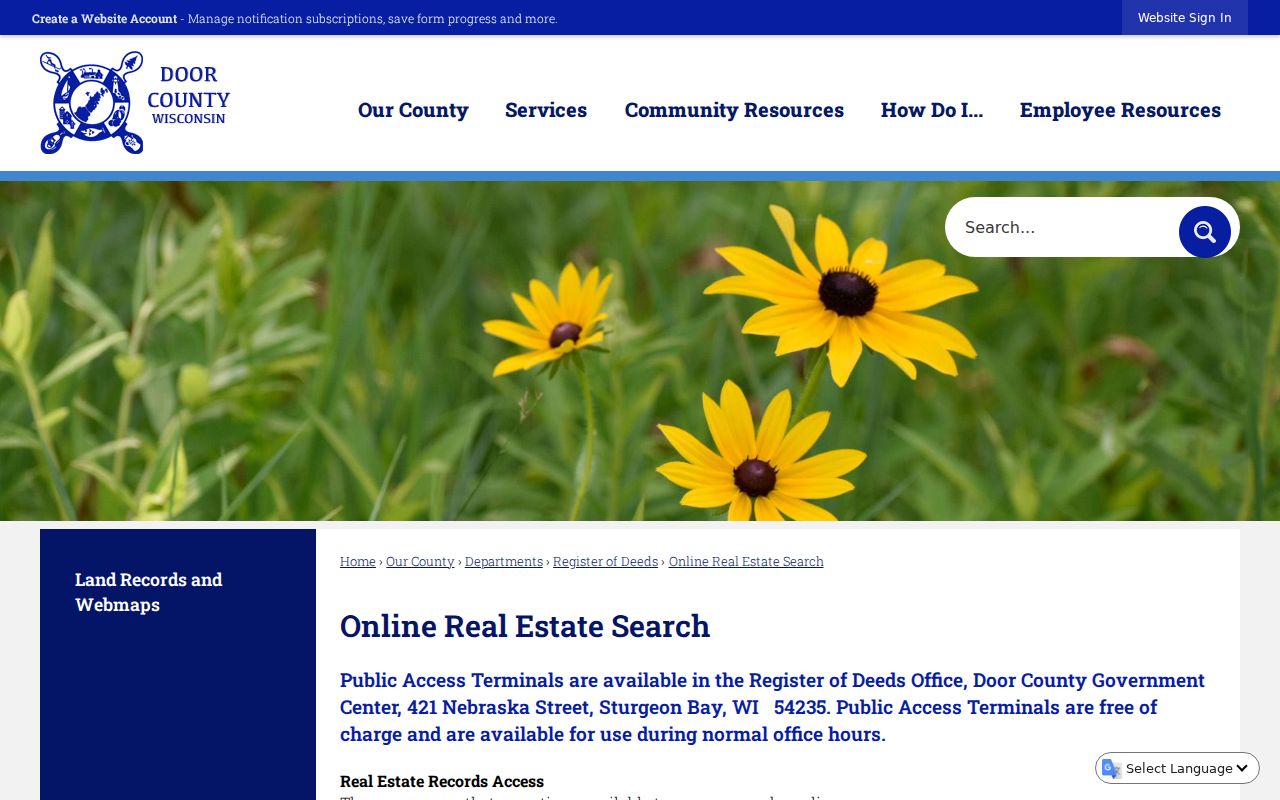
The county's own fee page shows the amounts in force at the time of any request.
Door County Recorded Names and Fraud Alerts
Door County connects its Register of Deeds page to Property Fraud Alert, a service that watches a name and sends notice when that name turns up in a recording event. It cannot block a filing. It also cannot judge whether an instrument is valid. An alert is a prompt to act, not a verdict: pull the actual record through the county and call the office if anything looks unfamiliar. The county likewise warns residents to tell its own copy route apart from unsolicited letters selling an overpriced deed.
Never treat an alert, or a search result, as a title examination. Deed records hold many instrument types. Mortgages, easements, liens, and releases appear alongside conveyances. When an encumbrance carries legal or financial weight, examine the document itself. Then consult a title professional or attorney. The official Register of Deeds page carries the alert link and office contact.
Door County Plats and Certified Survey Maps
The Register of Deeds files subdivision, condominium, cemetery, and transportation plats. It also files certified survey maps. Door County's online real-estate page describes CSM and plat images. These span the 1800s to the present. Start with the GIS layer to pin down a subdivision name. Then match the recorded map to a lot, block, or parcel description. A plat is its own instrument. It can explain a boundary or subdivision change a party index never shows.
Rural parcels call for a different check. Compare the deed's Public Land Survey description against its section, township, and range references. For a platted lot, confirm the recorded plat name plus the lot and block. Mapping locates a record; the recorded instrument remains the official document. Door County sets a separate copy charge for large plats. Review the current fee schedule before ordering paper.
Requesting a Door County Deed Copy
Pick the route that fits. Tapestry delivers images already available online. Laredo works on a subscription. The free terminal sits inside the Register of Deeds office. A counter request moves fastest with the parties, the instrument date, the parcel description, and a document reference in hand. The index may stop short of the year needed. Ask staff about tract or colortract material in that case. Never assume no deed exists. A certified copy must be requested as such, since certification carries its own charge.
Door County deed records and their images are access tools, not a title commitment. A copy proves the filed instrument's text. It cannot surface every unrecorded claim or promise a clean chain. The legal description may need checking against a recorded plat or survey as well. For a historic chain of title, lean on the tract index, plat books, and probate files as finding aids. Then return to the recorded land instrument for the conveyance evidence itself.
Recorded, not guaranteed. Door County's index shows recorded filings, not a complete title opinion. A title professional checks the chain and relevant interests before a transaction.